
Nobody hands you the words for this. You can spend years liking paintings without ever being handed the language for why, and then you stand next to someone at an opening who says something like "the impasto really does the work here" and feel, for a second, locked out of a conversation you were already part of. The words aren't a test. They're precision tools, built by people who needed to describe a specific physical sensation and didn't have another way to say it. Here are five worth actually having.
Impasto
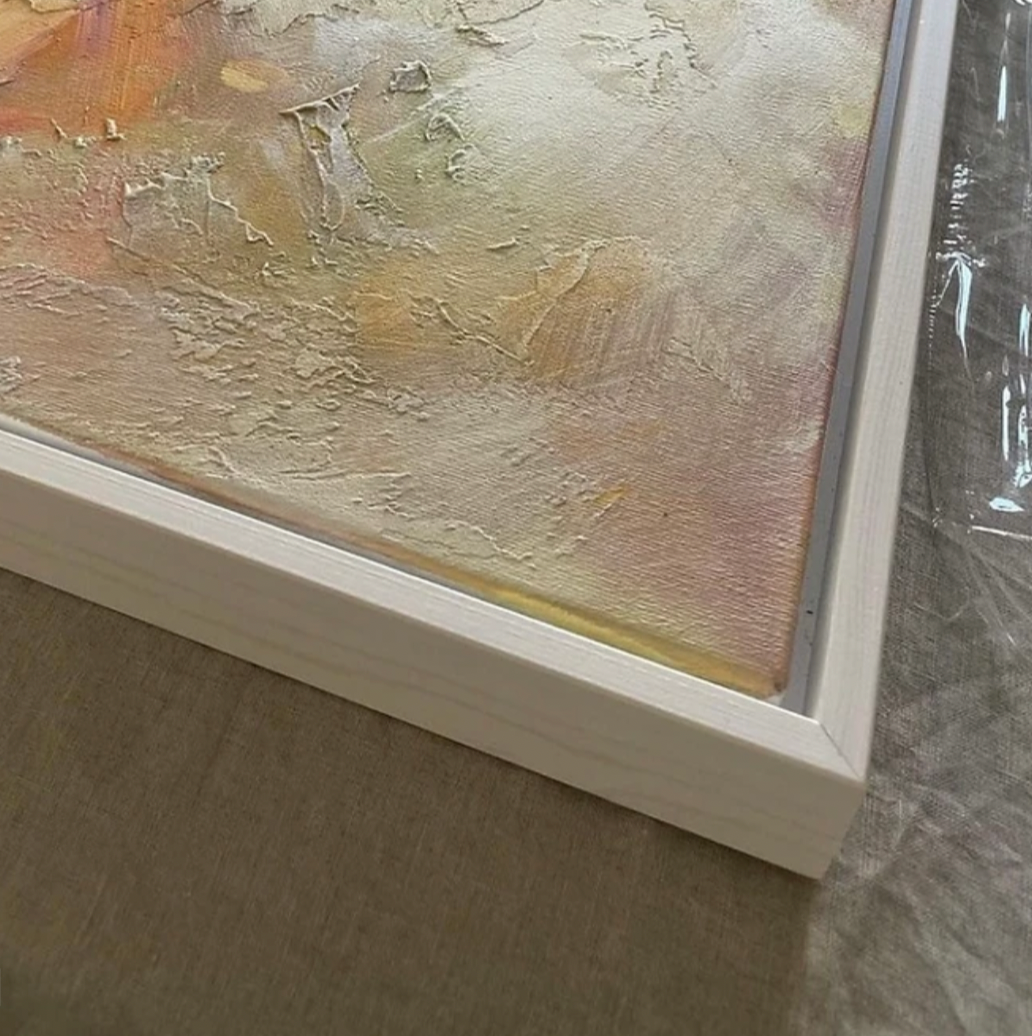
Paint applied thickly enough that it holds its own shadow. Van Gogh used it constantly, most famously in the sky of The Starry Night, where the brushstrokes stand up off the canvas by several millimeters and catch real light depending on where you're standing. This is the one term on this list you genuinely cannot experience from a photograph. A picture of an impasto painting flattens the entire point of it. The word exists because "thick paint" doesn't capture that the texture is doing compositional work, not just decorative work.
Chiaroscuro
The Italian word for the deliberate, dramatic contrast between light and dark. Caravaggio built an entire career on it: figures that seem to materialize out of pure black, lit from one hard source like a stage light with nothing else visible. The technique isn't about realism. It's about control, deciding exactly what the eye is allowed to see and what it has to fill in for itself. Once you have the word, you start noticing how much of a painting's mood is coming from what's been left in shadow, not what's been rendered.
Painterly
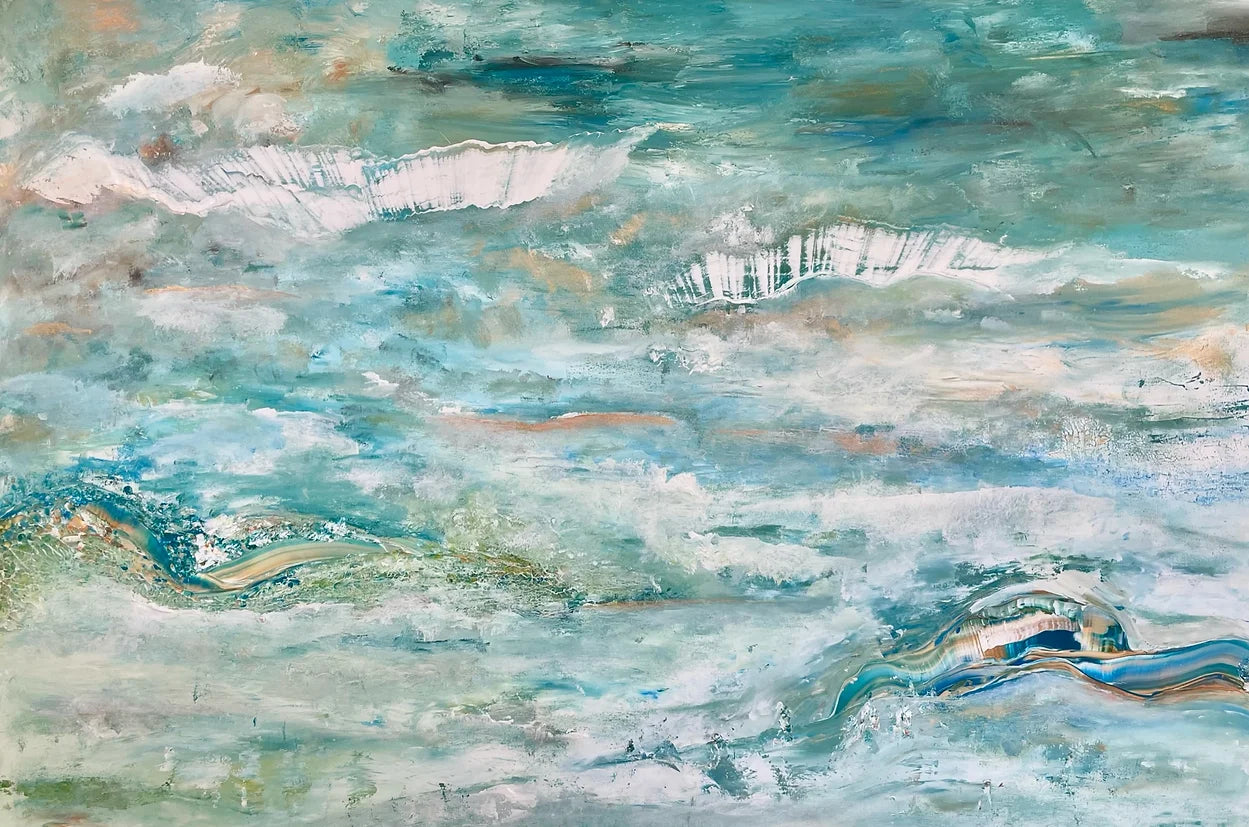
The art historian Heinrich Wölfflin used this term over a century ago to describe work where the brushstroke itself stays visible and part of the meaning, as opposed to "linear" work that smooths its own construction away so the image reads as if it simply appeared. A painterly surface shows its own making. You can watch the decisions happen.
Negative space
The unpainted or empty areas of a composition, which sounds like it should mean "nothing," except it's doing as much work as anything else on the canvas. In abstract work especially, the space around a shape is what gives the shape its weight, its direction, the sense of whether it's expanding or contained. Painters plan the empty parts as carefully as the full ones. Once you know to look for it, a composition stops reading as "shapes on a background" and starts reading as a relationship.
Palette
Not just "the colors in this painting." An artist's palette is the consistent, repeated set of color choices across a whole body of work, and it functions almost like a signature. You can often identify who made a painting before you read the label, purely from the palette, the same way you'd recognize a friend's handwriting. It's one of the fastest ways to actually trace an artist's development over time: watch how the palette shifts from an early period to a later one, and you're watching how they were thinking change.
None of this is required knowledge. Nobody is going to check. But once a word exists for something you've been half-seeing for years, you stop half-seeing it. That's the entire use of a vocabulary like this. Not to sound like a critic. To actually notice more of what's already in front of you.