

A space is never neutral.
We are profoundly shaped by the spaces we inhabit, and art plays a central role in shaping the emotional atmosphere of those spaces.
How a Room Actually Affects You
The human nervous system continuously scans environments for signals: safety, harmony, stimulation, intimacy, threat. We imagine perception as passive, but in reality the brain constantly interprets surroundings and adjusts emotional states accordingly. Light, texture, color, symmetry, scale, and symbolic imagery all affect cognition and mood before conscious thought even begins.
This relationship between environment and mind has been explored extensively within environmental psychology. Studies have shown that aesthetically coherent spaces reduce stress, improve concentration, and influence emotional regulation.
Roger Ulrich's well-known hospital studies in the 1980s demonstrated that patients exposed to natural scenery recovered faster and required less pain medication than patients facing blank walls. More recent research in neuroaesthetics has found that viewing art activates the brain's reward circuitry, particularly the orbitofrontal cortex, an area associated with pleasure, meaning, and emotional valuation. In one study conducted at University College London, participants viewing artworks they perceived as beautiful showed neural activity comparable to patterns associated with romantic attachment and deep emotional connection.
Beauty affects biology.
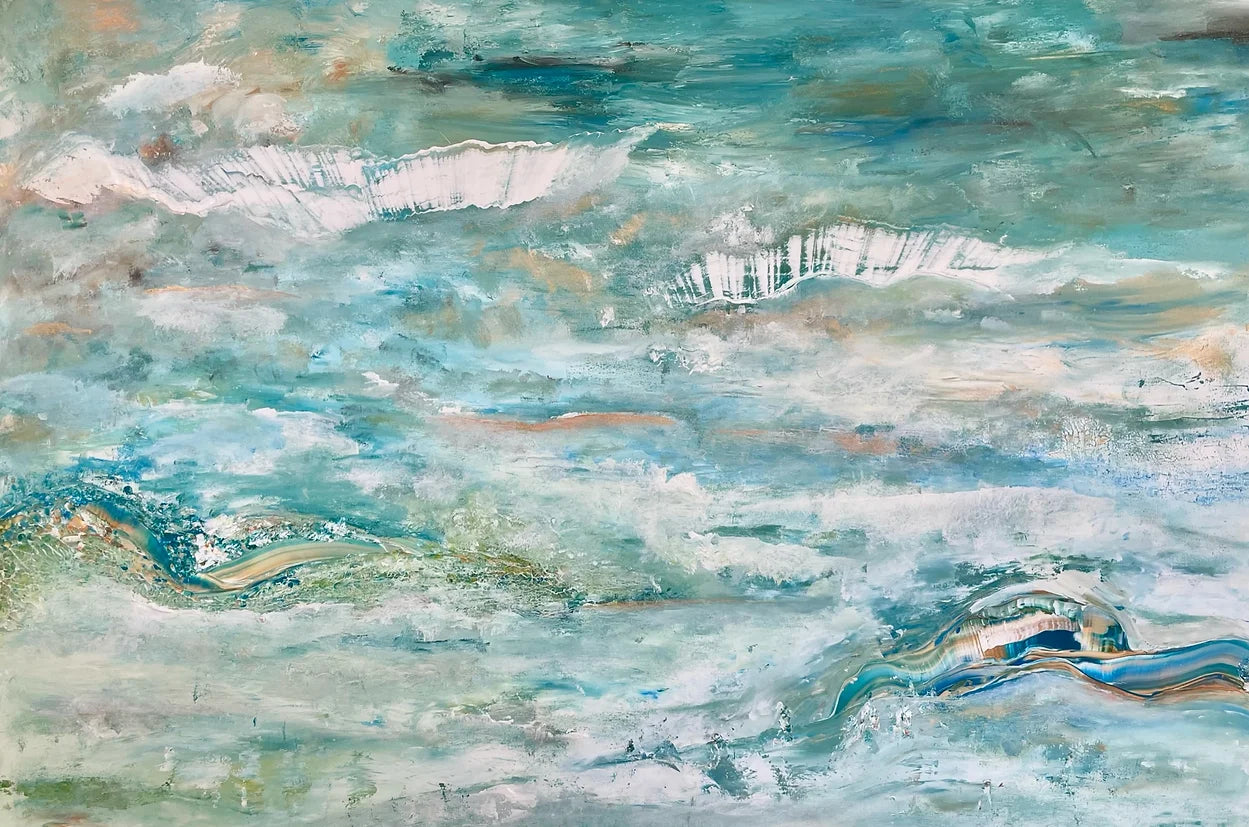
A painting can alter the psychological temperature of a room. It can soften sterility, create introspection, evoke memory, or generate calm. They allow the nervous system to settle.
This may explain why minimalist modern environments sometimes produce an unexpected sense of emptiness. Functionality alone does not satisfy human psychological needs. Efficiency is not the same as emotional nourishment.
Why Screens Flatten Everything
The contemporary world, however, increasingly prioritizes efficiency and speed.
Much of human life now unfolds in digital environments optimized not for contemplation, but for attention extraction. Images appear and disappear at unprecedented speed. The average person encounters thousands of visual stimuli daily through phones, advertisements, and social media feeds. Yet this endless exposure often produces emotional flattening, rather than contemplative presence and deeper feelings.
Digital images exist largely without physical consequence. They float through consciousness momentarily before disappearing. Scale is lost. Texture disappears. Images become detached from embodied experience.
What a Physical Painting Gives Back
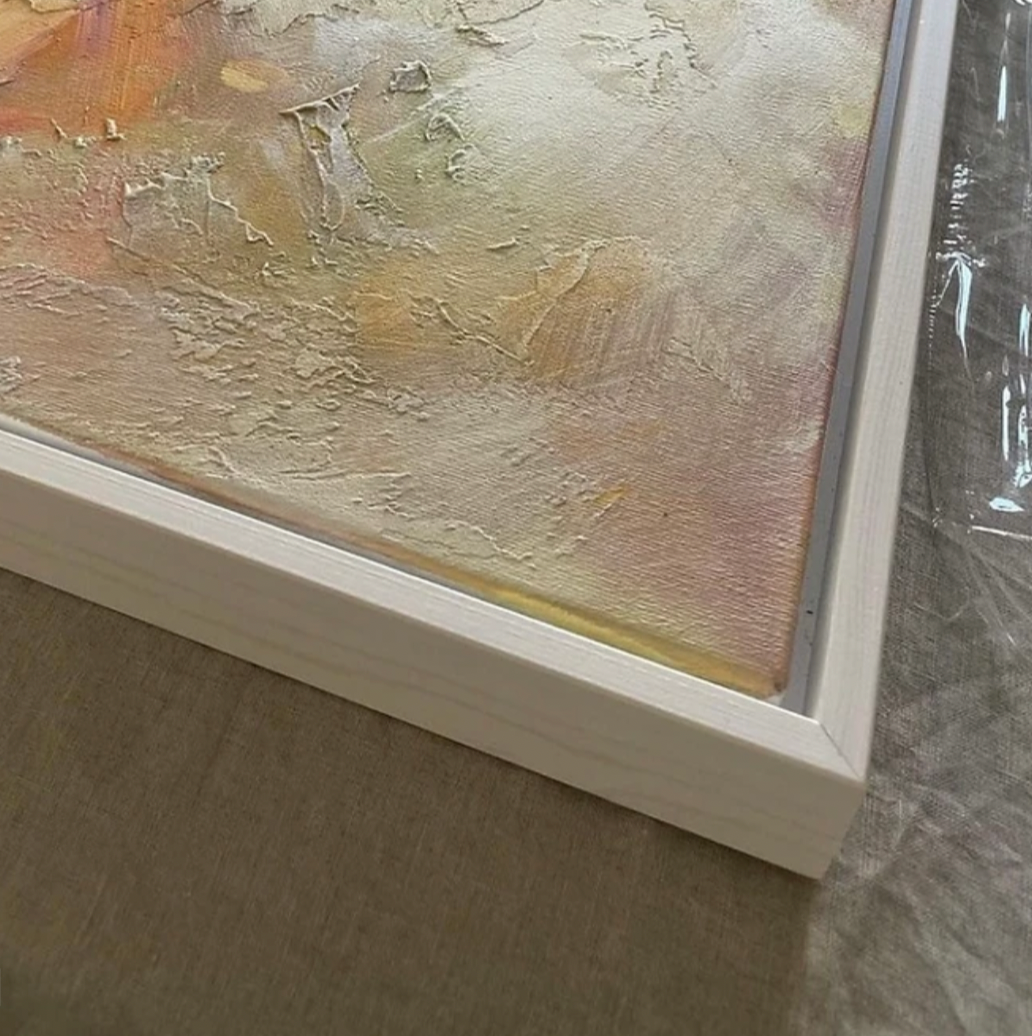
Physical art resists speed.
A painting occupying a physical room cannot be consumed in the same way. It changes with light throughout the day. It exists spatially alongside the viewer. It invites repeated encounters rather than instantaneous consumption.
Studies conducted in museums have shown that in-person encounters with artworks increase mindfulness, emotional reflection, and memory retention compared to viewing the same works digitally.
The cultural theorist Walter Benjamin anticipated this transformation nearly a century ago in The Work of Art in the Age of Mechanical Reproduction. Benjamin argued that reproduced images lose what he called “aura”, the unique presence of an artwork existing within time and space. Today, in an age of infinite digital reproduction, this loss appears even more profound.
Yet perhaps this explains why physical spaces and tangible art now feel increasingly important.
Art as a Grounding Space
As more of life becomes virtual, humans appear to hunger for grounding experiences: textured interiors, natural materials, meaningful objects, spaces carrying emotional depth. The rise of interest in slow living, mindful interiors, and sensory environments may reflect not aesthetic trends alone, but psychological compensation for digital abstraction.
Art becomes part of this restoration.
It interrupts speed. It creates pauses in perception. It reminds people that they possess bodies moving through physical environments rather than merely consciousness scrolling through information streams.
The psychologist Donald Winnicott spoke of the importance of “transitional spaces”, environments where imagination, emotion, and reality overlap. Perhaps this is why humans have always created art, even in periods of hardship and instability. Not because beauty is unnecessary luxury, but because meaning is survival.
A society deprived of beauty, symbolism, and contemplative space risks becoming impoverished. Without moments of reflection, humans become vulnerable to numbness. Without environments carrying emotional resonance, life begins to flatten into pure functionality.
Art resists this flattening.
And perhaps, in an age increasingly mediated through screens, this quiet function becomes more important than ever.