

Walk into a café in Lisbon, then one in Austin, then one in Seoul, and there's a decent chance you'll recognize the room before you recognize the city. Same reclaimed wood counter. Same brass pendant lights. Same off-white walls, same potted fig in the corner. In 2016, the critic Kyle Chayka gave this feeling a name: AirSpace, the flattening of interiors around the world into one interchangeable look, produced by platforms like Instagram and Airbnb rewarding the same visual formula wherever it shows up.
It isn't just cafés. Hotel lobbies and rental listings reach for the same coordinated palette now too, because it's legible at a glance and travels well online. Chase it closely enough and a home stops reading as a record of the person who lives there and starts reading as a record of what performed well in someone else's feed.
The Look That Feels Like the Rule
The matched room, the single palette, the room that looks like it was bought as a set, feels like the baseline. Like the correct way to decorate, and everything else is a compromise against it. A room that doesn't fully match reads, to most people, as unfinished. Something to fix, at some point.
But that assumption is only a few years old. For most of the history of people keeping objects in their homes, matching was never the point.
Before There Was a "Look" at All
Long before interior design existed as a profession, European collectors kept what were called wunderkammer, cabinets of curiosities. A wunderkammer might hold a piece of coral next to a small painting next to a fossil next to a carved shell, with no shared palette, no unifying theme, nothing coordinating one object to the next except that the person who owned the room had, at some point, found each one irresistible enough to keep. Nobody visiting a wunderkammer in 1600 asked whether the coral matched the painting. The question didn't exist yet. What the room proved was the range and specificity of one person's attention.
Which One Is Actually New
Put those two facts side by side and the matched room stops looking like the default and starts looking like what it actually is: a very recent style, produced by very recent platforms, optimized for a very recent kind of attention. The wunderkammer instinct, keep what you love, let it sit next to other things you love, don't worry about whether they agree with each other, is centuries older. It is closer to how people decorated for most of history than anything currently trending is.
Does a Room Have to Match to Look Intentional?
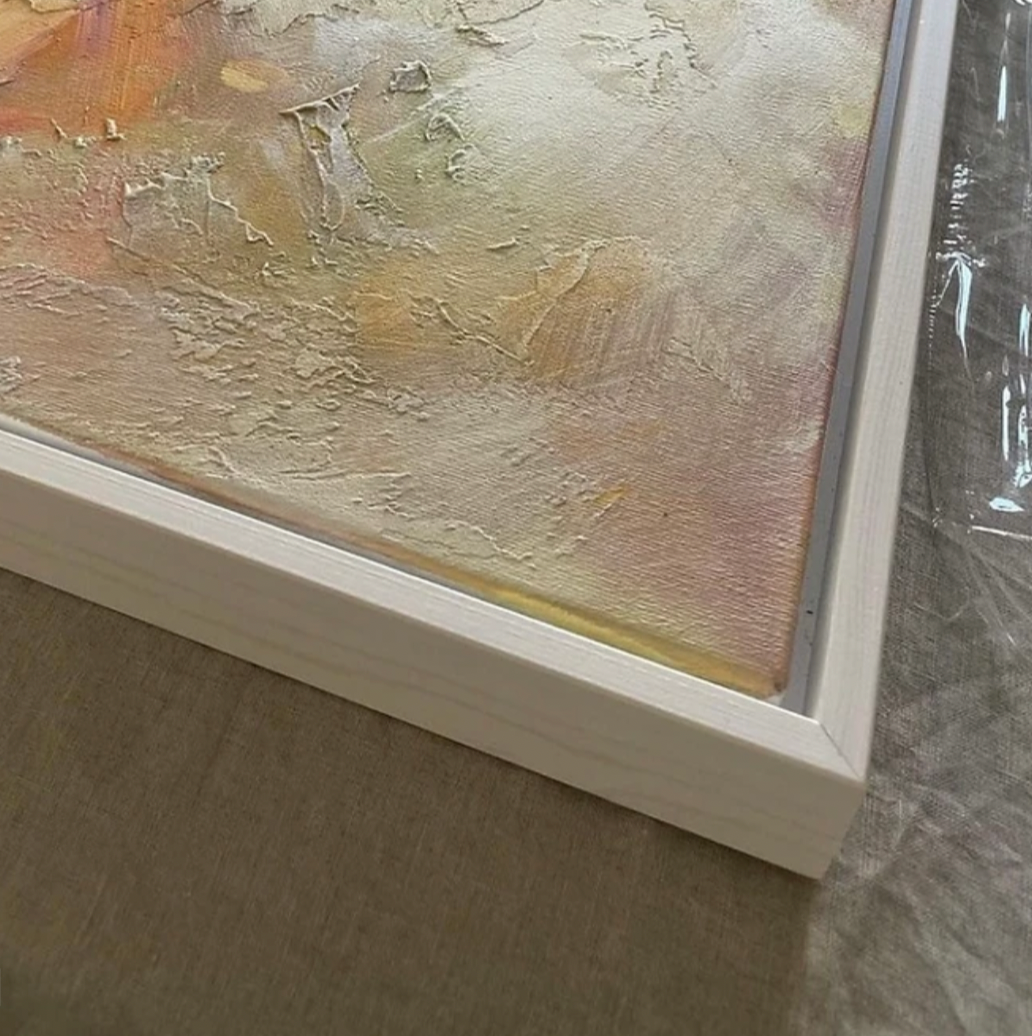
No. A room reads as intentional when every object in it has a personal reason for being there, not when the objects share a palette. A collected room, one piece bought on a trip, one inherited, one original artwork chosen because it stopped you in a room and you couldn't stop thinking about it, holds together because each piece was actually chosen. A matched room can look considered and still seem like the least personal room, because the choosing happened at the level of the algorithm, not the person.
Ten years from now, the painting will still be the thing you picked because you couldn't walk past it. That was always going to outlast whatever was trending the year you bought it.