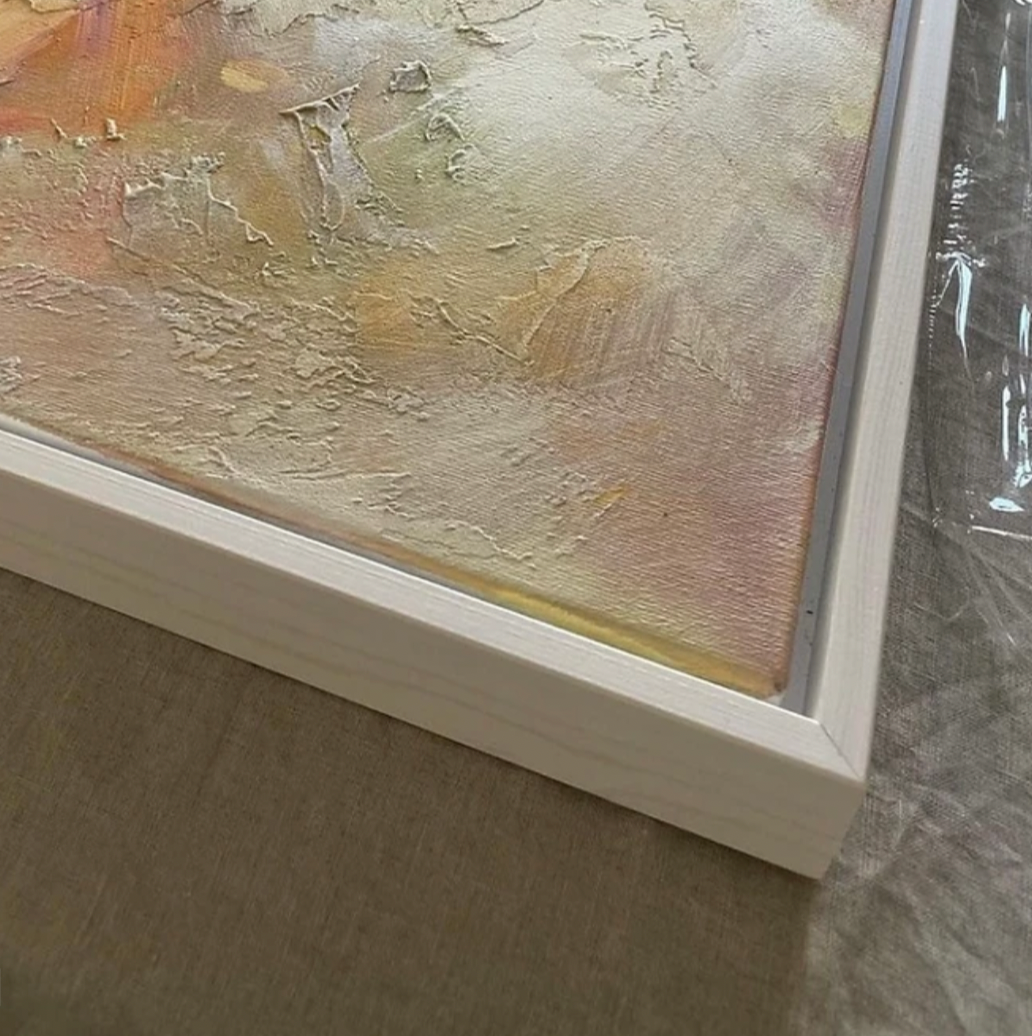


There is a color in a corner of a commissioned piece, or a particular shape, or a feeling the composition carries, that exists for exactly one reason. Somewhere in a first conversation, you said something, described a room, a memory, a feeling you wanted the space to hold.
You actually contributed to what exists. A commissioned piece is not a purchase you happened to feel invested in. It is an object that would not exist, in this specific form, without a decision you made.
What actually gets translated
It is a phrase you use to describe a room that ends up shaping a palette. It is a photograph of how light falls across one wall at a particular hour, which becomes the reason a composition leans warm instead of cool. It is a color that mattered for a private reason, a childhood house, a place someone loved, that finds its way into the work as a compositional decision with a real source, not as decoration. None of this happens by accident. It happens because a commissioner supplies something an artist, working alone, has no way to invent: their own specific context.
Two sets of decisions, not one
This is the part that gets lost when commissioning is described as a purchase with extra steps. A finished commissioned piece carries two sets of decisions. One is the artist's, the technical choices about color, mark, and composition, built from years of practice. The other is the commissioner's, the brief, the story, the specific room and life the piece is being made for. Neither set of decisions is more responsible for the outcome than the other. Take either one away and a different piece exists, or none at all.
What this actually means
A commissioned piece is not more meaningful because more attention got paid to it, the way a purchase can feel more considered the longer someone deliberates over it. It is more meaningful because something real and specific to you is actually present in it. That is not sentiment attached after the fact. It is a decision that shaped the object itself, sitting in the work permanently, the same way any decision does.
That is not a feeling worth explaining away. It is closer to the truth than most purchases get to be: something exists in the world that carries your authorship.
The commissioning process
In practice, that means the process takes four to six weeks from first conversation to finished piece, and how much of it you control is itself a decision. You can set the size, the colors, the style, and whether the surface takes on texture, down to the smallest specification. Or you can hand over more of that ground and let the piece take shape from a looser brief, trusting the read on what you've described. Either way, nothing about the piece is generic. It's built from exactly the amount of direction you gave it, whether that was precise or open. If you want to see what that's produced for other people, the portfolio is where those pieces live.