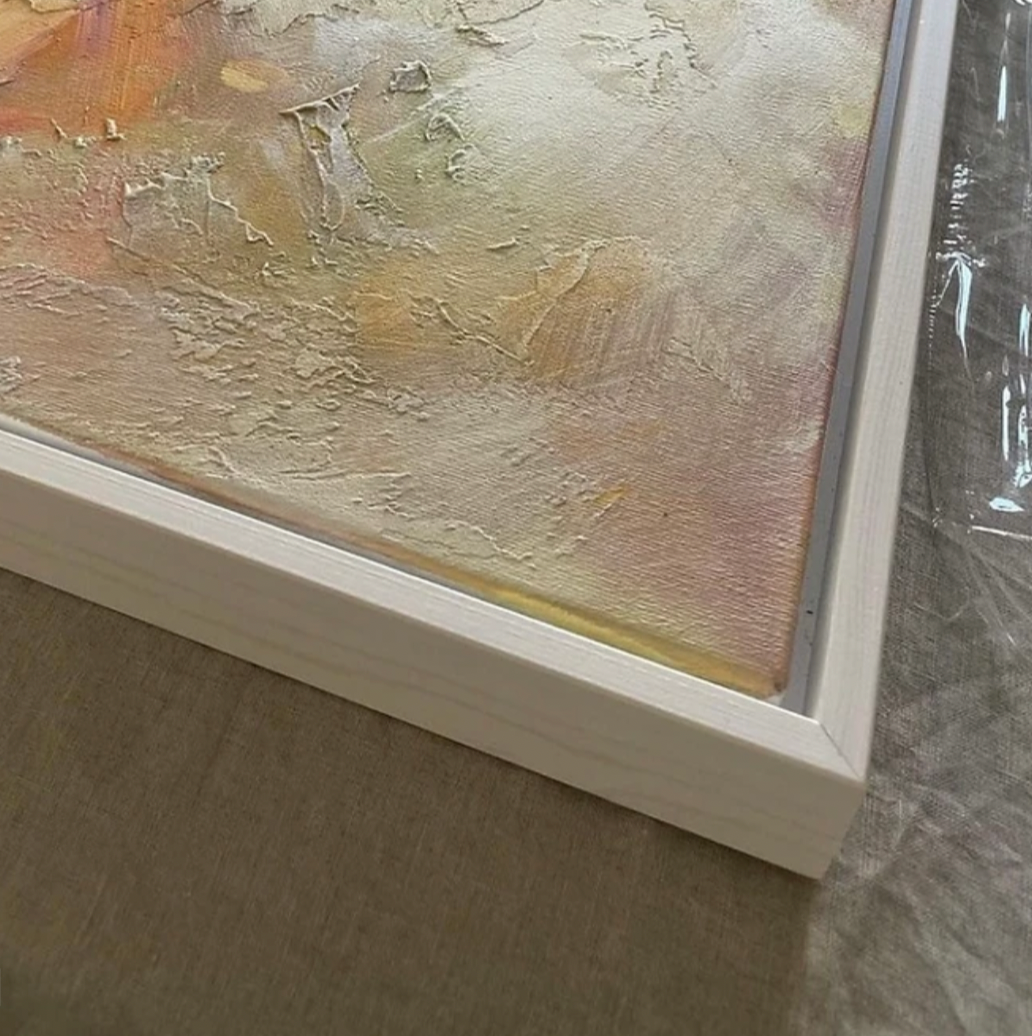


You walk into a room and you already know. Not what you think about the piece on the wall, that comes a moment later, in words. You know how you feel about it first, faster than you could explain why, faster than you could even finish looking at it.
Preferences need no inferences
The psychologist Robert Zajonc gave this exact effect a name in 1980, in a paper called "Feeling and Thinking: Preferences Need No Inferences." His argument, backed by experiments that held up for decades afterward, was that affective reactions, liking or not liking something, can form before and independently of the conscious reasoning people assume produces them.
In one well known version of the experiment, people were shown images for a fraction of a second, too briefly to consciously register what they had seen, and still reliably rated some as more likable than others. Asked to explain the choice, they could not. The preference had already formed somewhere reasoning never got access to.
What the fast reaction actually is
This is not a shortcut or a lesser version of a real judgment. Visual and emotional processing in the brain moves on a faster track than deliberate, verbal reasoning. A reaction to color, composition, and balance can register through pathways built for exactly that kind of fast read, well before the slower, language based part of thinking has anything to contribute. Reasoning is not being skipped. It simply has not caught up yet.
Why the second-guessing is the part to watch
Where this gets useful is in the gap between the two. Most people, standing in front of something they had an instant, strong reaction to, spend the next several minutes talking themselves toward or away from it, hunting for reasons a friend would find convincing, or quietly worrying the reaction was somehow uninformed. But the fast reaction was not uninformed. It was a visual system doing the job it is built to do, at the speed it is built to do it. The slower reasoning that follows is useful for a different purpose, building the vocabulary to explain a reaction, not for correcting or validating it in the first place.
What to actually do with this
The instant response you have standing in front of a piece is not noise to be filtered out before the real judgment begins. It is the real judgment, arriving first. The sentence you build afterward, why the color works, why the composition holds together, why it belongs on that wall, is worth building. It gives you language for something you already knew. But it was never the thing doing the deciding. That happened already, in the first second, before you had a single word for it.