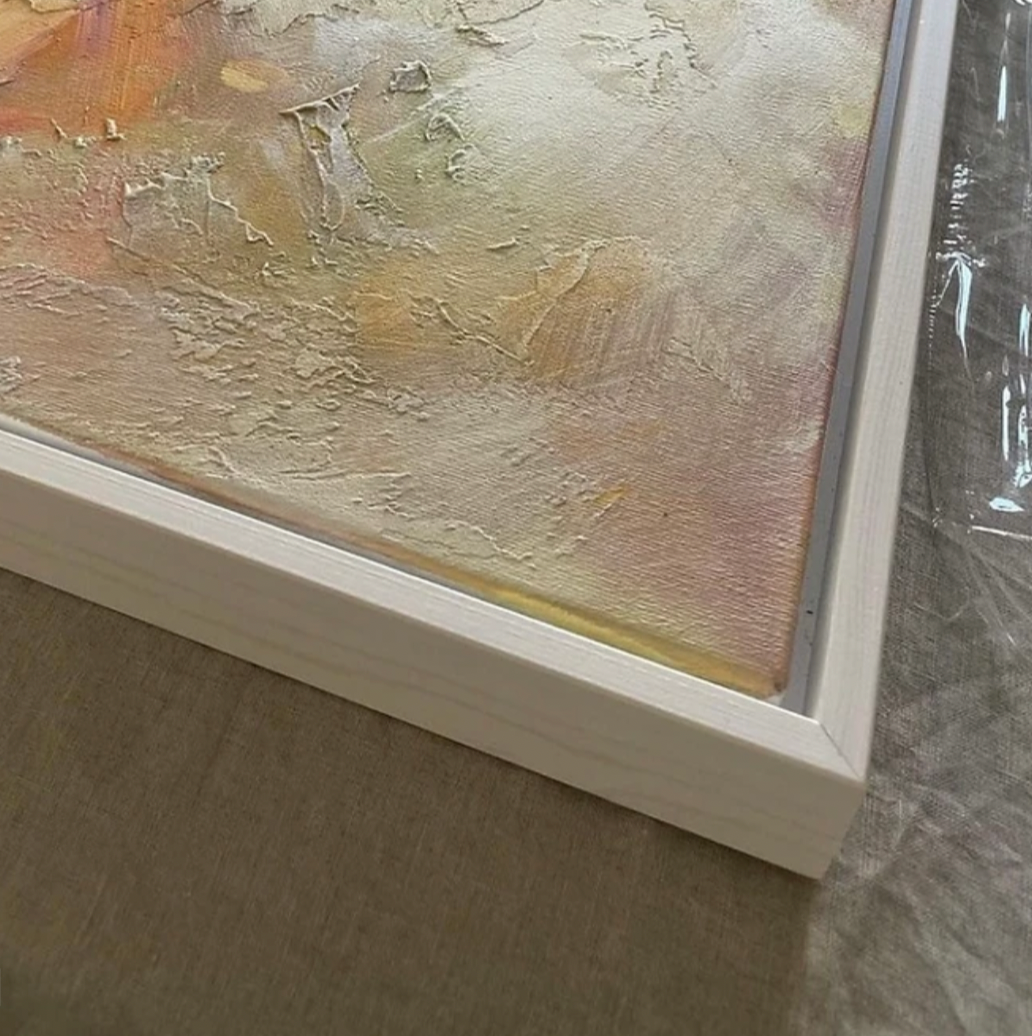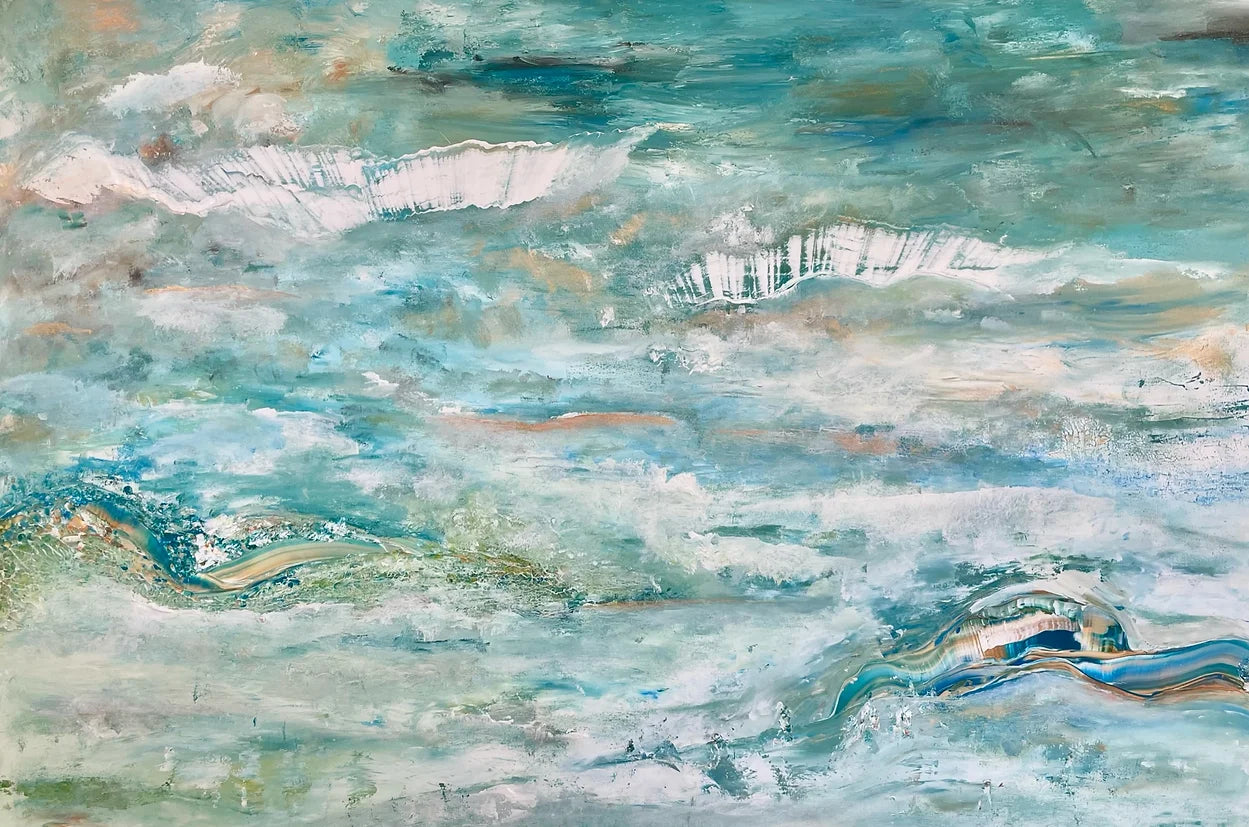


Abstract art can be harder to shop for than a landscape or a portrait, mostly because there's no obvious subject to check your reaction against. Here's what actually matters when you're choosing a piece, whether it's your first original or your fifth.
What Makes a Painting Abstract
Abstract art doesn't represent a person, place, or object the way a portrait or a landscape does. Instead of showing you something recognizable, it works through color, shape, texture, and composition on their own terms. Color, gesture, and form are the subject.
A Short History, Starting Earlier Than You'd Guess
Most histories of abstract art start with Wassily Kandinsky, usually dated to 1911. The Swedish painter Hilma af Klint was working in fully abstract forms at least five years earlier, from 1906, producing large-scale non-representational canvases she believed were guided by forces beyond herself. She kept most of the work out of public view during her lifetime and specified in her will that it not be shown for twenty years after her death. It wasn't widely exhibited until a 2018 retrospective at the Guggenheim, by which point Kandinsky had already been credited as the movement's originator for over a century.
The point isn't to relitigate who came first. It's that abstraction wasn't one artist's invention. It emerged from several people, in different countries, working out the same idea at roughly the same time: that a painting doesn't need a recognizable subject to carry real meaning.
How to Choose a Piece for Your Space
Choose the piece you keep returning to. The one your eye goes back to across a room is a better guide than the one you can most easily explain.
You can also start with the room's existing colors and mood, not a piece you saw and loved in isolation. Color is relative, not absolute. The same painting can look warm and glowing against one wall and flat against another, without a single pigment changing, so the wall a piece hangs on becomes part of what you're seeing. You can ask for images of the piece in different light before you decide.
Size and Placement
As a rough guide, a piece should occupy roughly two-thirds the width of the furniture it hangs above, a sofa, a console, a headboard. An oversized statement piece works well on a large blank wall or in a room with high ceilings. A grouping of two or three smaller works can do the same job in a smaller room. When you're unsure on scale, tape the dimensions out on the wall before you commit. You're welcome tot get in touch if you would like a mockup of any artworks in your space.
Original vs. Print
A print is a reproduction: the same image, produced any number of times. An original is a single physical object that exists exactly once, with its own texture, brushwork, and history. No two are ever identical, even from the same artist. Prints are less expensive and useful for filling wall space quickly. An original is the one nobody else will ever own.
What Determines the Price of an Original
Price on an original painting reflects complexity, size, materials, the time involved, not a fixed formula.
Buying Direct From an Artist vs. Through a Gallery
Buying directly from the artist who made a piece isn't a workaround or a discount version of collecting. For most of art history, it was simply how art changed hands, long before the gallery-dealer model existed. Buying direct also means you're dealing with the person who made the piece, not a selection someone else curated on your behalf, and you can often ask directly about the story behind it or commission something built around your own space.
Caring for an Original Painting
An original needs some basic care: kept out of direct sunlight, away from heat sources, dusted with a dry cloth rather than cleaned with any liquid. The full care guide covers what actually matters, room by room.
Is Abstract Art a Good Investment?
Most people who buy art, abstract or otherwise, buy it for how it makes them feel rather than as a financial investment, and that's a reasonable way to choose. An original from a working artist tends to hold its meaning and its value better than a print, simply because it's the only one that exists, but the strongest reason to buy a piece is still that you want to live with it.